




Complete guide to maintaining your automatic watch
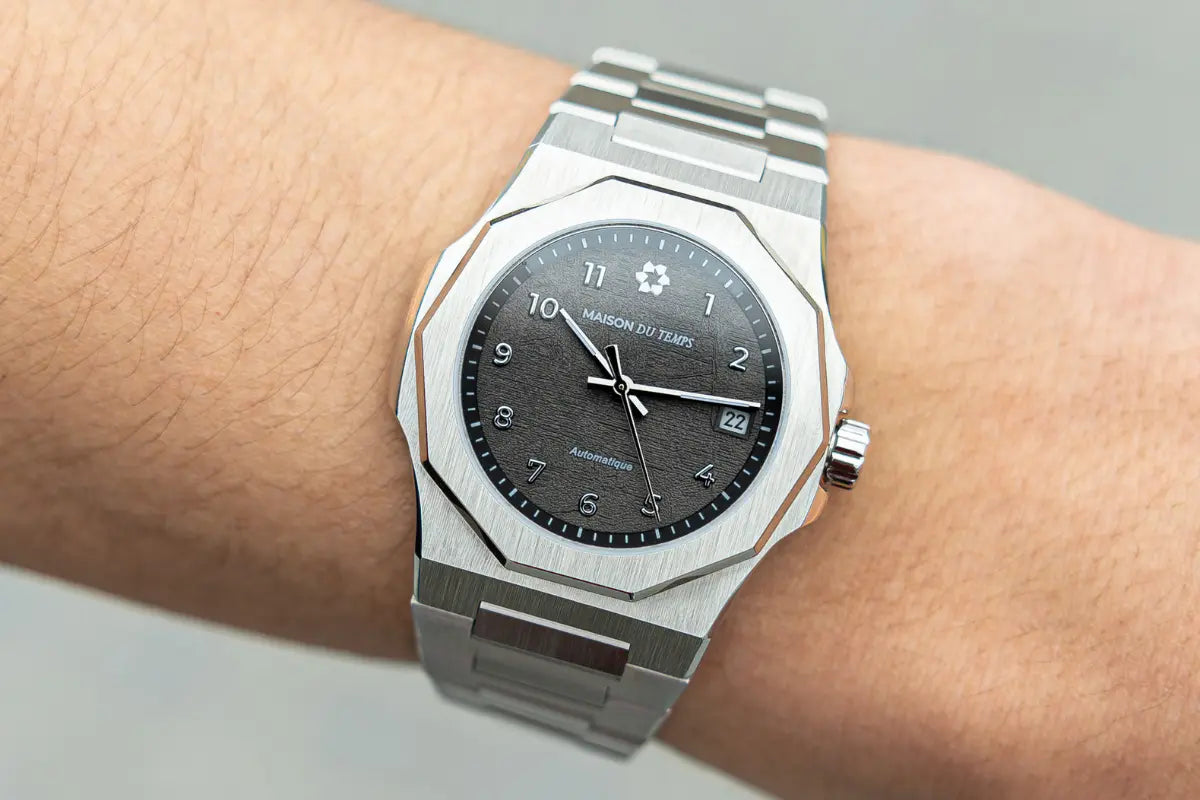
Yourautomatic watchrepresents much more than a simple timepiece: it is a sophisticated mechanical jewel that deserves special attention. To preserve its precision and extend its lifespan, regular maintenance is required. From daily cleaning to optimal winding, including professional servicing every 5 to 7 years, discover all the essential actions to keep your watch in perfect working order.
The 5 key steps to maintaining your Maison du Temps automatic watch
1. Wear it regularly
The automatic movement recharges thanks to your gestures. If you don't wear it often, use a winder to keep the mechanism active.
2. Clean it after use
Wipe a soft, dry cloth over the case and strap to remove dust, sweat or skin marks.
3. Avoid shock and water
Even though some watches are waterproof, avoid prolonged immersion, excessively humid environments and high-impact activities.
4. Store it properly
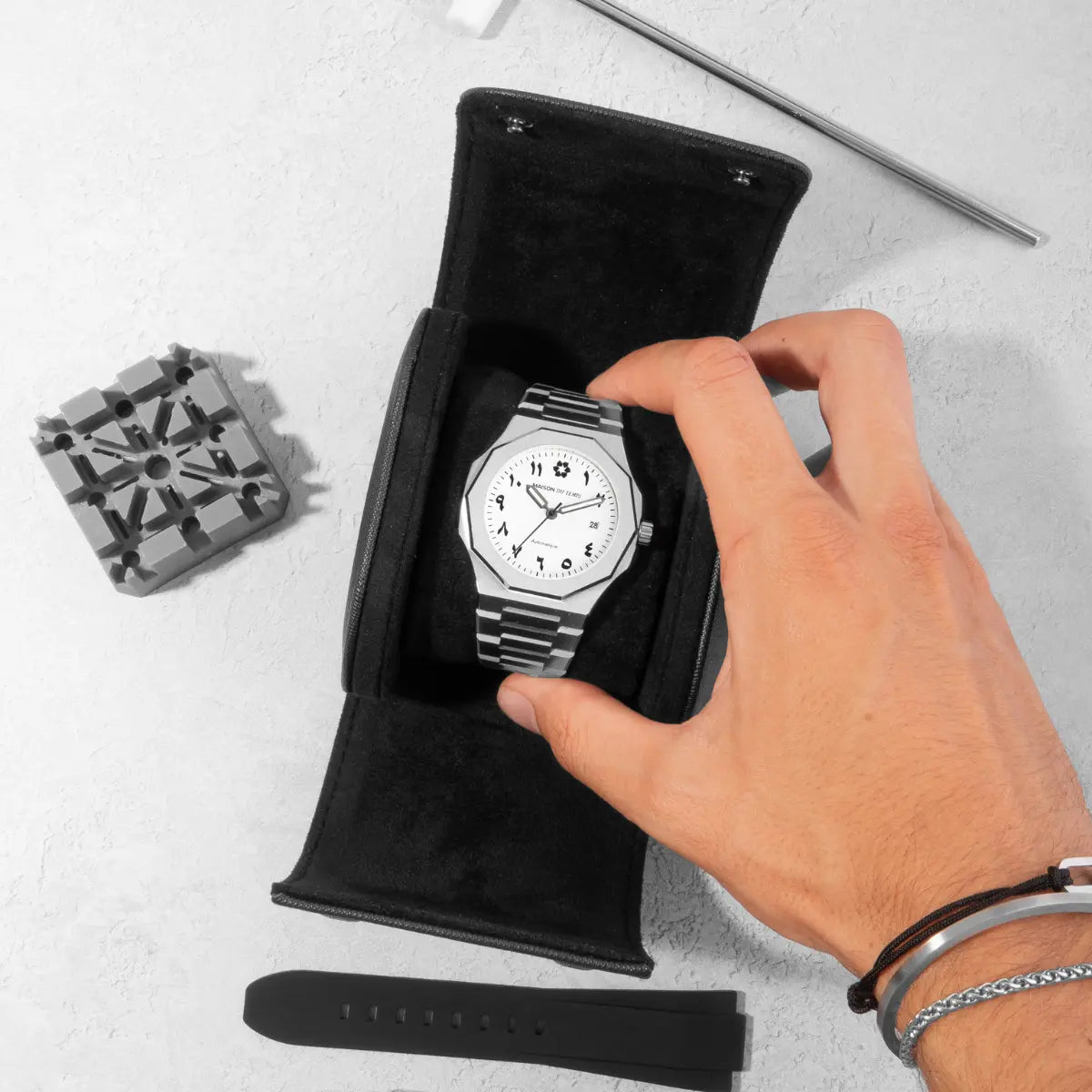
When you are not wearing it, place it in its case or on a support protected from direct light and temperature variations.
5. Have it serviced regularly
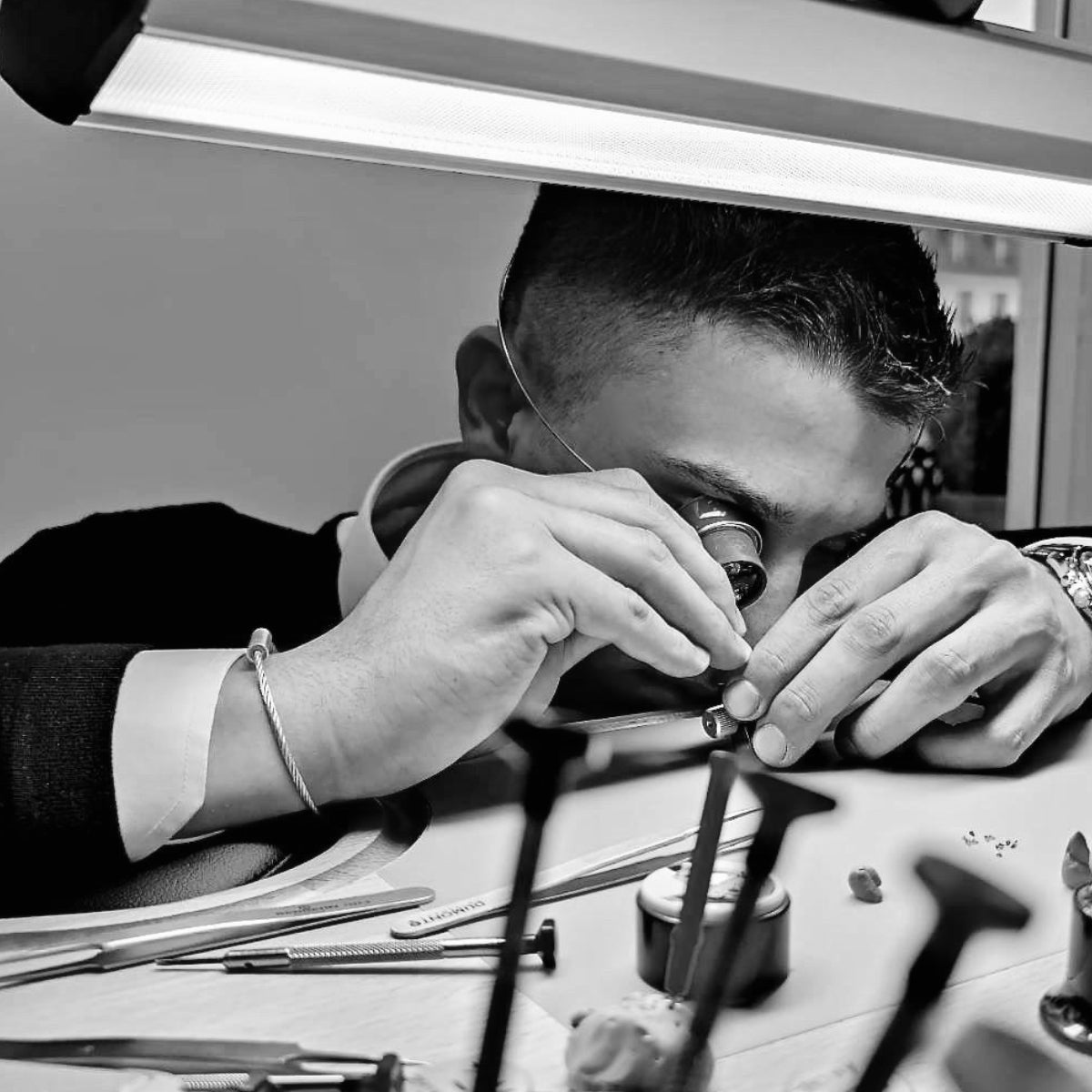
All the5 to 7 years, entrust your watch to a watchmaker for complete cleaning and lubrication of the movement.
Understanding how an automatic watch works to better maintain it
The principle of automatic winding
THErotorconstitutes the heart of the automatic winding system. This oscillating weight, usually made of steel or gold, rotates freely with each movement of the wrist. Each natural movement of your arm activates this rotor which transmits its energy to the barrel spring via a sophisticated gear system.
The accumulation ofenergyoccurs continuously while you are wearing your watch. Even the most subtle movements are enough to keep the spring under tension. This power reserve allows your watch to operate between 38 and 42 hours depending on the MaisonDuTemps models, even when you are not wearing it.
Some watches incorporate abidirectional winding: the rotor generates energy whatever its direction of rotation. Others use a unidirectional system with a ratchet mechanism that optimizes energy transmission in only one direction of rotation.
The essential components of movement
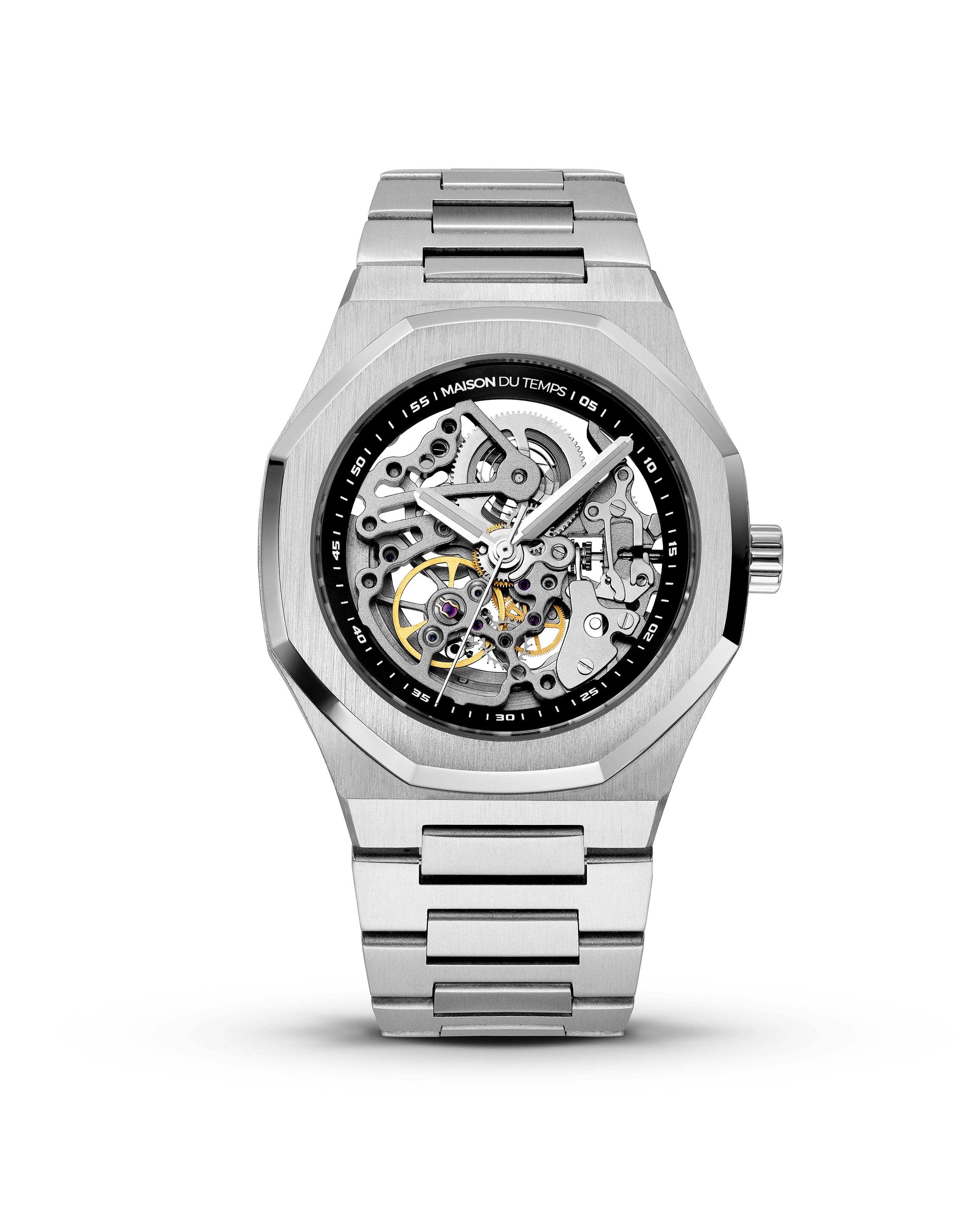
Thereplatinumforms the structural base that accommodates all internal mechanisms. This precision-machined metal plate supports all the cogs and guarantees their perfect alignment. The bridges complete this architecture by firmly holding each piece in its exact position.
The barrel spring stores the energy transmitted by the rotor and gradually releases it. Its controlled relaxation powers the train of cogs which multiplies the force up to the hands. The escapement regulates this release of energy in precise pulses, while the balance oscillates at a constant frequency to cut up time.
Of thesynthetic rubiesreduce friction at critical points of movement. These hard stones allow the pivots to rotate without premature wear, thus preserving precision over the long term.
The power reserve and its importance
L'autonomyof your watch determines how long it continues to run without wrist movement. This duration typically varies between 40 and 48 hours for standard models, but can reach 72 hours on high-end timepieces.
Knowing this characteristic saves you from the inconvenience ofmanual windingdaily. You can remove your watch on Friday evening and find it still working on Monday morning. The reserve indicator, when it exists, visually displays the remaining energy available.
Insufficient autonomy requires the time to be reset regularly, disrupting the precision of complications such as the date. To optimize this operating time, wear your watch daily or invest in an automatic winder that simulates the natural movements of the wrist.
Detailed steps for daily maintenance of your automatic watch
Cleaning the case and bracelet
First remove yourmetal braceletif possible to access hard-to-reach areas. This separation also protects the internal components from water infiltration during cleaning.
Use asoft clothin microfiber to eliminate perspiration and accumulated residue on a daily basis. For a more thorough cleaning, prepare a mixture of warm water and mild soap in a small container.
Dip a soft toothbrush in this soapy solution. Gently rub the links of the bracelet and the contours of the watch case to dislodge any encrusted impurities. Absolutely avoid harsh chemicals which may damage finishes.
Rinse thoroughly with clean water to remove any soap residue. Dry immediately with a clean cloth, paying particular attention between the links where moisture can stagnate and cause dirt to accumulate.
Safe Cleaning Techniques
Always check thewaterproofing of the watchbefore any contact with water. A vintage or luxury watch requires special precautions to avoid any scratches on the delicate finishes.
Use a gentle circular motion when cleaning the case. This technique preserves polished surfaces and avoids micro-scratches which can dull the shine of your timepiece. For particularly dirty areas, leave to act for a few moments before brushing.
Thereverificationof the crown remains essential: it must be perfectly screwed in to guarantee the proper functioning of the internal mechanism. Avoid any abrasive product or solvent that could damage the seals. A type of cleaning adapted to your daily physical activity will extend the long life of your automatic watch.
Recommended cleaning frequency
Aweekly cleaningis enough for most casual users of automatic watches. This cadence helps prevent the accumulation of residue without unnecessarily exposing your watch to repeated handling.
Daily wearers should adopt a more vigorous pace. Perform watch maintenanceevery 3 to 4 daysif you wear it constantly, especially during sports activities or in hot weather. Perspiration and humidity accelerate the clogging of external components.
Some situations require immediate cleaning. After exposure to salt water, cosmetic products or a dusty environment, do not wait for your next regular maintenance session. A quick rinse preserves finishes and prevents corrosion of exposed metal parts.
Improve the life of your watch thanks to the winder and manual winding
When to use an automatic winder?
THEcollectors with severalautomatic watchesfind in the watch winder an essential solution. Switching between different watches becomes a pleasure without constraints, each piece remaining on time and functional.
Watches with complex complications, such as the perpetual calendar or moon phases, benefit greatly from this accessory. Restarting these functions after a shutdown is tedious and may require the intervention of a professional for a delicate repair.
Your pace of life also determines this need. Frequent travelers or people who regularly alternate between several watches avoid repeated manual winding. The winder preserves the internal mechanics by maintaining the circulation of oils, extending the life of the movement between each professional service.
How to manually wind your watch?
Remove your watch from your wrist before handling. This fundamental precaution protects the delicate mechanism from involuntary twists that may occur during reassembly.
Locate the crown on the right side of the case. If your model has a screw-down crown, gently unscrew it counterclockwise until it releases. Grasp this small piece firmly between your thumb and index finger.
Turn the crown clockwiseperforming between 20 and 30 complete rotations. Thismomentconnection with your timepiece allows you to feel the progressive resistance of the spring as it tightens. Stop as soon as you feel noticeable resistance to avoid any damage to the internal mechanism.
Return the crown to its initial position by pushing it or screwing it back depending on your model. Your watch now has the energy it needs to function optimally for several hours.
Optimal adjustment and wearing to avoid damaging your watch
Correct bracelet fit
An ill-fitting bracelet compromises both the comfort and the precision of yourautomatic watch. Too tight, it hinders blood circulation and can damage the mechanism during sudden movements of the wrist.
L'ideal spacecorresponds to the width of a little finger slipped under the bracelet. This measure guarantees sufficient freedom of movement while keeping the watch stable on your wrist. A bracelet that is too loose causes the timepiece to oscillate, disrupting the operation of the rotor and reducing the efficiency of the automatic winding.
For metal bracelets, entrust the adjustment to a professional watchmaker. Removing links requires specialized tools and technical expertise to preserve the integrity of the structure. Leather straps offer more flexibility thanks to their multiple perforations, allowing personal adjustment according to your daily preferences.
Setting the time and date
Strictly respect the"death zone"when setting the date. This critical period extends from 9 p.m. to 3 a.m., when the automatic changeover mechanism is active. Handling the crown during these hours risks irreparable damage to the teeth of the date disc.
To identify the right time, first position the hands at 6 a.m. before any intervention. Then pull the crown out to the second notch to adjust the date, then to the third to set the time precisely. The second hand stops at this position, allowing you perfect synchronization.
A simple tip prevents you from making mistakes: move the hands forward until you see the date change naturally. If it tips, you're at midnight. Otherwise, it is midday. This foolproof method guarantees you arisk-free adjustmentfor your precious automatic timepiece.
Protection against dangers
Avoid shock and vibration
Your automatic movement houses hundreds ofmicroscopic componentswho work in perfect harmony. Brutal impacts disrupt this delicate balance, potentially disrupting precision or damaging the fragile pivots of the cogs.
Remove your watch before any strenuous physical activity such as tennis, golf or cycling on uneven terrain. These sports generate repeated vibrations that prematurely fatigue springs and gears. Even household chores involving vibrating tools directly threaten internal mechanics.
For regular sporting activities,opt for a specially designed watchto resist shocks or simply leave your watch in the locker room. A well-fitted bracelet also limits unwanted movements which amplify the vibrations transmitted to the case.
Extreme temperatures and magnetic fields
THEsudden thermal variationsrepresent an unknown danger for your internal mechanism. Going from a freezing environment to intense heat causes metals to expand and contract, disrupting the precision of your timepiece. Lubricating oils freeze in extreme cold or become too fluid in extreme heat.
Keep your watch within a temperature range of 0°C to 50°C. Remove it before entering a sauna, near a heater or during outdoor activities in extreme weather.
As for themagnetic fields, they directly disrupt the balance spring and the steel cogs. Smartphones, laptops, induction hobs and speakers generate invisible but formidable waves. Prolonged exposure may permanently magnetize certain parts, requiring professional demagnetization by a qualified watchmaker.
Waterproofing and contact with water
L'humidity poses a silent threatfor your precious automatic mechanism. Even watches with water resistance can see their seals degrade over time, leaking tiny droplets that oxidize the internal workings.
Check the condition of your winding crown regularly. A poorly screwed position transforms this opening into a preferred entry point for water. After each exposure to salt or chlorinated water, gently rinse your watch with fresh water then dry it carefully.
Pressure variations during aquatic activities often exceed theoretical waterproof specifications. A simple shower jet can generate pressure equivalent to several meters deep. If you noticecondensation under the glass, consult a qualified watchmaker immediately to avoid irreversible damage to the movement.
Storage and preservation
Optimal storage conditions
The storage environment directly influences the longevity of your automatic timepiece. Choose a stable location, away from variations in humidity and sources of dust which can infiltrate the mechanism.
Aoriginal boxor a dedicated watch box offers optimal protection against scratches and accidental impacts. These containers maintain a stable microclimate while protecting your watch from particles suspended in the ambient air.
Avoid bathroom drawers where water vapor stagnates, as well as cupboards near radiators. Instead, choose bedroom furniture or a safe for high-value models. For thecollectors with several pieces, separate each watch into its individual compartment to prevent any friction between the metal cases and bracelets.
What damages an automatic watch?
L'natural wear of oilsis among the main causes of deterioration of aautomatic watch. These essential lubricants gradually degrade, creating friction between the cogs which impairs the precision of the movement.
Dust accumulates insidiously in the mechanism as the seals age. These microscopic particles act as an abrasive, accelerating wear on delicate pivots and gears.
Excessive or improper winding damages the barrel spring and transmission components. Forcing the crown beyond its natural strength causes internal breaks that are difficult to repair.
Prolonged inactivity also harms automatic movement. Without regular circulation, the oils freeze and the springs lose their elasticity, permanently compromising the chronometric performance of your timepiece.
Professional revision
Recommended review frequency
THEmodern watchesrequire a complete overhaul every 5 to 7 years depending on daily use. This periodicity varies according to several determining factors: the complexity of the movement, the frequency of wearing and the exposure conditions.
Watches worn daily require more attention than those kept in a case. An automatic chronograph requires more frequent servicing than a traditional three-hand watch. Vintage models require monitoring every 3 to 5 years maximum.
Some prestigious brands like Rolex recommend longer intervals, up to 10 years for their recent calibers. This recommendation is based on developments in synthetic lubricants and manufacturing materials. Your watchmaker will assess the actual condition of the movement to determine the optimal maintenance schedule.
Service price and maintenance costs
THEbudget to planfor a complete service varies considerably depending on the complexity of your timepiece. Count between 200 and 500 euros for a standard automatic watch from an independent watchmaker. Models with complications such as a chronograph can reach 600 euros.
Replacing wearing parts increases the final bill. Crown, gaskets or barrel spring represent additional costs which can double the initial amount. Always ask for adetailed quotebefore validation of the work to avoid unpleasant surprises.
Repair: when to consult a watchmaker?
Some symptoms require immediate intervention by aqualified professional. Does your watch suddenly stop despite regular wear? The mechanism likely has a serious internal failure that goes beyond simple preventative maintenance.
The appearance of condensation under the glass constitutes an absolute emergency. This humidity irreparably compromises the metal components and requires rapid professional dehumidification. Likewise, a crown that abnormally resists winding often indicates a breakage of the barrel spring.
THEsignificant chronometric disturbances- advance or delay greater than several minutes per day - reveal an imbalance of the pendulum. Only an experienced watchmaker masters the adjustment techniques on a test bench to restore original precision. Never wait for these dysfunctions to get worse because they gradually damage the entire movement.
Common mistakes to avoid
Handling the crown directly on the wrist is the most common mistake among owners ofautomatic watches. This apparently innocuous practice exertsdangerous mechanical stresseson the winding system and can fracture fragile internal components.
Wearing your timepiece in the shower, even if it is waterproof, exposes the mechanism to brutal thermal shock. The alternation of hot and cold water expands then contracts the materials at different rates, compromising the sealing of the joints. Many homeowners also neglect immediate drying after contact with salt water, leaving the salt crystals to gradually corrode metal finishes.
Leaving your watch sitting still for months is costly neglect. Without regular movement, thelubricants freezeand the springs lose their natural flexibility. This prolonged inactivity transforms simple preventative maintenance into major repair, multiplying costs by three or four.
notionvc:234f9866-2c0a-4071-8838-29d16874b621